Keywords
World War II
Hitler's Germany
economic policy
institutional mechanism
war economy
How to Cite




Number of views: 107
Number of downloads: 54
Abstract
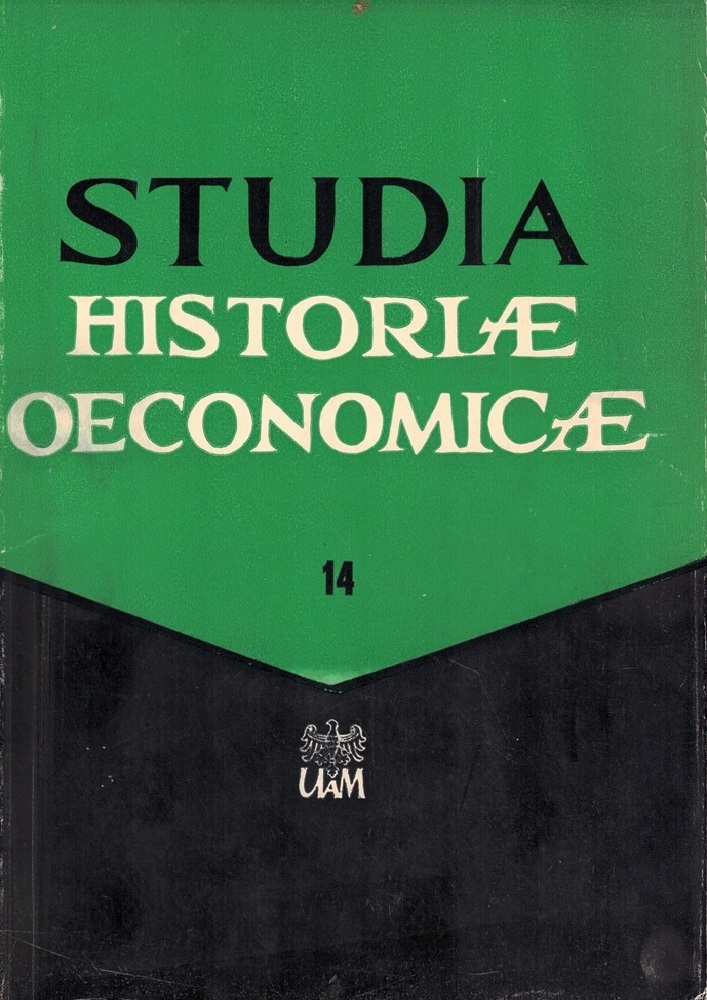
This article explores the economic policy concepts and initiatives of Nazi Germany concerning the reorganization of European foreign trade in 1943–1944. Against the backdrop of mounting military setbacks – particularly after the defeat at Stalingrad and the failure of the offensive at the Kursk salient – the need to more comprehensively mobilize Europe’s economic potential for the German war economy became urgent. This shift in strategic circumstances triggered intensified discussions about a so-called “European economic planning” under German leadership. The aim of the study is to analyze the institutional structures and economic actors involved in the design and implementation of these plans. Particular attention is given to the Planning Office of the Reich Ministry for Armaments and War Production, as well as the activities of the so-called “Europe Circle” and the “Working Group for Foreign Trade Issues,” which brought together representatives of heavy industry, banks, and ministerial bodies. The study draws on a broad range of primary sources, including internal memoranda, meeting minutes, policy notes, and correspondence involving leading economic experts and functionaries such as Albert Speer, Arnold Köster, and Karl Blessing. The analysis shows that these efforts aimed not only to increase short-term armaments output but also to lay the foundation for long-term German dominance in postwar Europe. The study concludes that these economic planning initiatives were deeply rooted in the Nazi ideological vision of German supremacy and sought to achieve a comprehensive integration of European production capacities under hegemonic German control.
References
BA – Bundesarchiv Koblenz, NS 6/288; R 3/1508; R 3/1791; R 3/1792; R 3/1941; R 3/1954; R 3/1960; R 7/14; R 7/2013; R 7/2017; R 7/2025; R 7/2128; R 7/2129; R 7/2131; R 11/2171; R 12 I/230; R 12 I/231; R 12 I/232; R 12 I/233; R 12 I/236; R 12 I/250; R 13 I/136.
ZStA – Zentrales Staatsarchiv Potsdam. Deutsche Bank AG, no. 7010; 7015; 16 682.
ZStA – Zentrales Staatsarchiv Potsdam. Deutsche Bank AG, Filmsammlung, no. 10 975.
ZStA – Zentrales Staatsarchiv Potsdam. Deutsche Bank AG, IG Farbenindustrie AG, no. 1040/83; 1431; 6449.
ZStA – Zentrales Staatsarchiv Potsdam. Deutsche Bank AG, Reichswirtschaftsministerium, no. 14 487.
Albrecht, K. (1970) Das Menschliche hinter dem Wunder. 25 Jahre Mitwirkung am deutschen Wirtschaftsaufbau. Düsseldorf: Econ Verlag.
Eichholtz, D. und Schumann, W. (1969) Anatomie des Krieges. Neue Dokumente über die Rolle des deutschen Monopolkapitals bei der Vorbereitung und Durchführung des zweiten Weltkrieges. Berlin: VEB Deutscher Verlag der Wissenschaften.
License
Copyright (c) 1979 Wolfgang Schumann

This work is licensed under a Creative Commons Attribution-ShareAlike 4.0 International License.