Keywords
Kazan Mother of God
Szamotuły
Byzantine art
Marian devotion
Polish–Lithuanian Commonwealth
How to Cite
Abstract
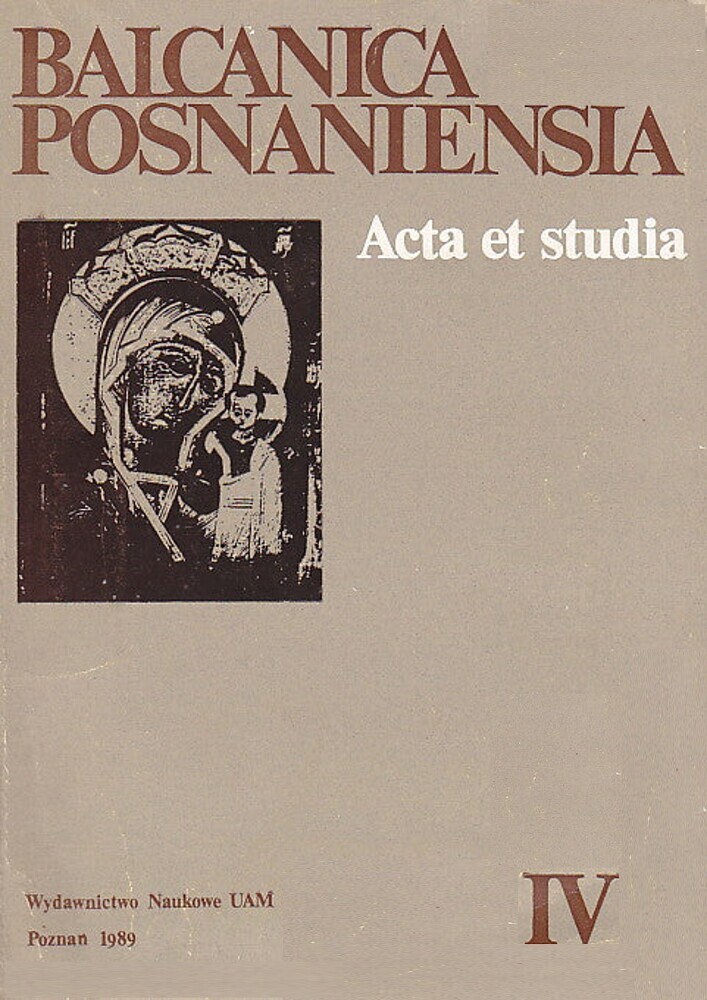
The author investigates the presence of Byzantine art in the Polish lands through an analysis of the icon of the Mother of God with the Child preserved in Szamotuły. The purpose of the article is to demonstrate the social and religious significance of this icon and its place within the culture of the early modern Polish–Lithuanian Commonwealth. The author employs iconographic and historical analysis, drawing upon archival sources, ecclesiastical documents, and accounts of the cult surrounding the image. The article discusses in detail the artistic form of the icon, a copy of the famous Kazan Mother of God, representing an intermediate type between the Hodegetria and the Eleusa. The author reconstructs the history of the image from its arrival in Szamotuły in the seventeenth century through the efforts of Aleksander Wolf to the development of a local cult of the miraculous image. Particular attention is devoted to accounts of miracles and to ecclesiastical commissions established to investigate the supernatural phenomena associated with the icon. The findings demonstrate that a Byzantine icon could be fully incorporated into the Catholic religious culture of the Commonwealth and function as an object of intense devotion. The study highlights the enduring influence of the Byzantine tradition in Polish culture and its ability to adapt to a Latin Christian environment.
References
Descriptio miraculosae imaginis B.M.V. in Arce Szamotulensi, 1666, tekst w zaginionej księdze przechowywanej dawniej w archiwum parafialnym w Szamotułach [tytuł skrócony; autor podawany jako ks. Jan Wirobowski, także Walenty Jan Wiroboski].
Regestrum, archiwum parafialne w Szamotułach, opis ks. Franciszka Bonawentury Brzezińskiego.
Wielkimi wsławiona Cudami w Obrazie Sławney Kollegiaty Szamotulskiey Naydodtoynieysza Jedynego Boga Matka Maria W Roku 1666. dnia 15 Maia Swiatu Polskiemu za cudowną ogłoszona A W roku 1687. Za pozwoleniem Jasnie Wilmoznego Iegomości Xiędza Hieronima z Wielkiego Chrząstowa Wierzbowskiego [...] a zapilnym staraniem Wielebnego Duchowieństwa Szamotulskiego, do druku z Cudami podana, ku większey Chwale Bozey, y czći Boga Rodźicy Panny, w Poznaniu w Drukarni Xiędza Woyciecha Laktanskiego Roku 1687.
Dąb-Kalinowska B., Teologia ikony w II połowie XVII w., „Artium Quaestiones” 1983, t. 2, s. 35–56.
Gałka W., Dawny klasztor franciszkanów w Pyzdrach. Dokumentacja historyczno-architektoniczna PKZ, Poznań 1980.
Iwanoyko E., Ikona św. Jerzego szkoły nowogrodzkiej w zbiorach prywatnych w Poznaniu, „Zeszyty Naukowe UAM. Historia Sztuki” 1961, t. 3, s. 3–19.
Katalog zabytków sztuki w Polsce, t. 5, z. 23: Powiat szamotulski, Warszawa 1966.
Kałużyński Cz., Cudowny obraz Matki Boskiej Szamotulskiej (maszynopis, niepublikowana monografia), Szamotuły b.d.
Kuchowicz Z., Obyczaje staropolskie, Łódź 1975.
Lexikon der christlichen Ikonographie, t. 3, Rom–Freiburg–Basel–Wien 1971.
License
© by Uniwersytet im. Adama Mickiewicza w Poznaniu, Wydział Historii, Poznań, 1989
OPEN ACCESS