
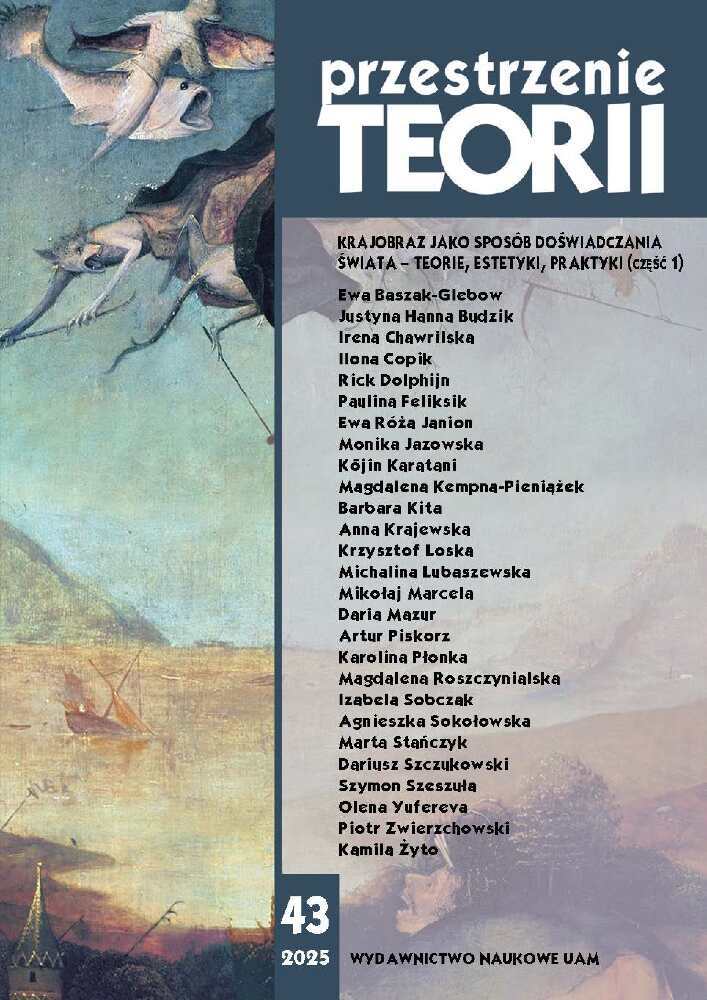
Abstrakt
This article reinterprets Natsume Sōseki’s Theory of Literature (Bungakuron, 1906) as a historically premature intervention that exposes the contingent, nineteenth-century construction of “literature” and “literary history.” It argues that Sōseki’s apparently eccentric question – “What is literature?” – targets the hidden historicity behind claims of Western universality and rejects linear developmental narratives and “-isms” as explanatory wholes. In place of periodizing categories, the article highlights Sōseki’s formalist impulse (including his F+f model), which treats “romanticism” and “naturalism” as variable elements within works rather than successive stages. The article further links this critique to the Meiji-era “discovery of landscape” as an epistemological shift: landscape becomes visible only through an inversion of perception associated with the “inner man.” By reading Kunikida Doppo’s Unforgettable People alongside the reclassification of sansuiga under Western pictorial frameworks, it shows how realism and interiority co-produce modern forms of representation. Ultimately, the article suggests that Sōseki’s theoretical impasse does not simply precede his fiction but helps generate it, making critical distance from “literature” the condition of his creativity.
Bibliografia
Karatani K., Fūkei no hakken, [w:] Nihon kindai bungaku no kigen, Tōkyō 2008, s. 8–40
Licencja
Prawa autorskie (c) 2025 Szymon Szeszuła (Tłumacz); Kōjin Karatani

Utwór dostępny jest na licencji Creative Commons Uznanie autorstwa – Użycie niekomercyjne – Bez utworów zależnych 4.0 Międzynarodowe.
Autorzy
Autorzy tekstów przyjętych do publikacji w czasopiśmie „Przestrzeniach Teorii” są zobowiązani do wypełnienia, podpisania i odesłania na adres redakcji umowy o udzielenie nieodpłatnej licencji do utworów, z zobowiązaniem do udzielania sublicencji CC.
Zgodnie z umową, autorzy tekstów opublikowanych w czasopiśmie „Przestrzeniach Teorii” udzielają Uniwersytetowi im. Adama Mickiewicza w Poznaniu niewyłącznej i nieodpłatnej licencji oraz zezwalą na użycie sublicencji Creative Commons Attribution-NonCommercial-NoDerivatives 4.0 International (CC BY-NC-ND 4.0).
Autorzy zachowują prawa do dalszego, swobodnego rozporządzania utworem.
Autorzy, którzy wykorzystują w swoim tekście cudze utwory (np. ilustracje, fotografie) proszeni są o dostarczenie do redakcji czasopisma zgodę na publikację od uprawnionych podmiotów.
Użytkownicy
Zainteresowani użytkownicy internetu uprawnieni są do korzystania z utworów opublikowanych po 2015 roku „Przestrzeniach Teorii” tylko w calach niekomercyjnych, pod następującymi warunkami:
- uznanie autorstwa - obowiązek podania wraz z rozpowszechnionym utworem, informacji, o autorstwie, tytule, źródle (odnośniki do oryginalnego utworu, DOI) oraz samej licencji;
- bez tworzenia utworów zależnych - utwór musi być zachowany w oryginalnej postaci, nie można bez zgody twórcy rozpowszechniać np. tłumaczeń, opracowań.
Do wszystkich tekstów opublikowanych przed 2015 r. prawa autorskie są zastrzeżone.
Inne
Uniwersytet im. Adama Mickiewicza w Poznaniu zachowuje prawo do czasopisma jako całości (układ, forma graficzna, tytuł, projekt okładki, logo itp.).